

Rules explained
Daily loss limits, explained
Calculate the daily floor, understand the midnight UTC reset and see why floating gains can change tomorrow's room.
4 min read
What changes after you pass —
and how to size your trades for each.
MultiFunded editorial team · Rule data checked 23 October 2026
· 5 min read
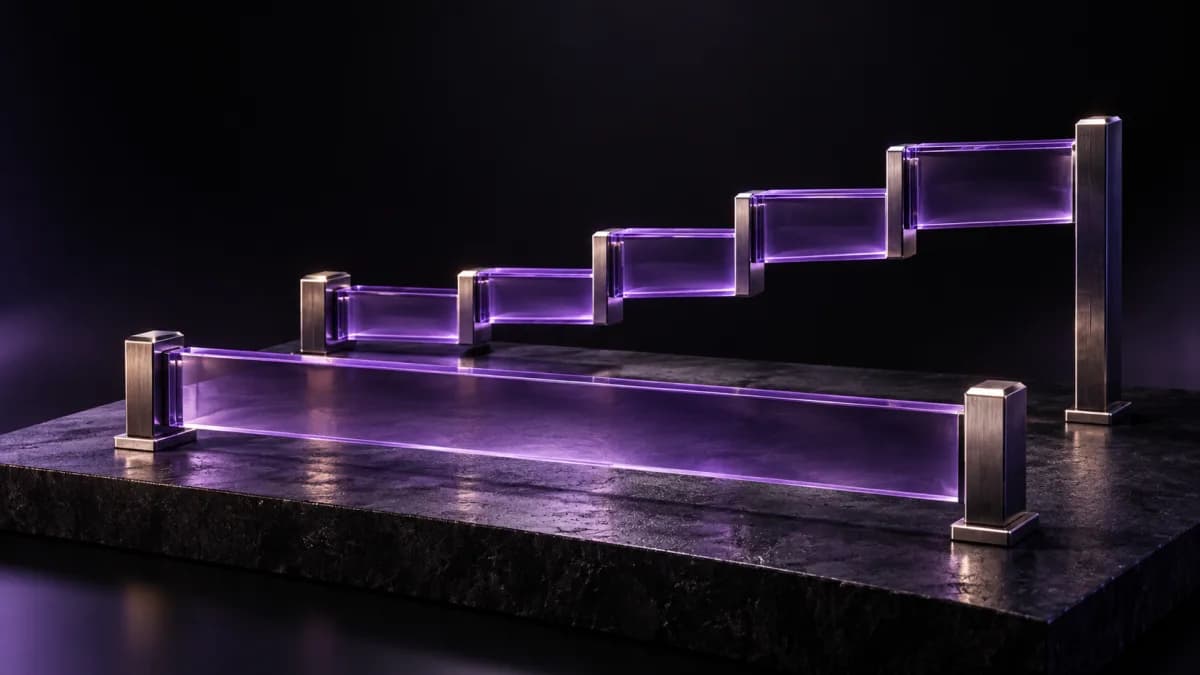
Maximum loss — often called maximum drawdown — is the line your account can't cross. Most traders check how big it is. The better question is where it sits, and whether it moves.
A static floor is set once, from your starting balance. Gains don't raise it. Losses don't lower it. Every gain you make adds to the room above it.
| Moment | Balance | Floor | Room above the floor |
|---|---|---|---|
| Start | $100,000 | $93,000 | $7,000 |
| After +$4,000 | $104,000 | $93,000 | $11,000 |
| After +$8,000 | $108,000 | $93,000 | $15,000 |
| Pullback to $102,000 | $102,000 | $93,000 | $9,000 |
Example only — not a forecast.
A good run builds a cushion. A pullback after it still leaves you well clear of the line.
A trailing floor sits a set percentage below the highest balance your account has reached — 7% on 1-Step Standard. When your account sets a new high, the floor rises with it. When the account falls back, the floor stays where it is. It never moves down — not after a losing day, and not after a reward — and it doesn't stop at your starting balance: it keeps following new highs. Instant updates its floor at the end of each trading day.
The floor is checked against your equity, so open losses count towards it.
| Moment | Highest balance | Floor (93% of the high) | Room above the floor |
|---|---|---|---|
| Start | $100,000 | $93,000 | $7,000 |
| After +$4,000 | $104,000 | $96,720 | $7,280 |
| After +$8,000 | $108,000 | $100,440 | $7,560 |
| Pullback to $102,000 | $108,000 | $100,440 | $1,560 |
The floor is a percentage of your highest balance, so the room grows a little with each new high. Your dashboard shows your rule progress. Example only — not a forecast.
Same account, same 7%, same trades:
Static floor:
$9,000of room after the pullback.
Trailing floor:
$1,560of room after the pullback.
On a trailing floor, the floor climbs behind you, so gains build far less room. The better your run, the closer an ordinary pullback brings you to the line.
That doesn't make trailing unworkable. It makes sizing the skill that matters.
| Programme | Evaluation | Simulated funded |
|---|---|---|
| 1-Step Standard | 7% static | 7% trailing |
| 1-Step Pro | 6% static | 6% trailing |
| 2-Step Standard | 10% static | 10% static |
| 2-Step Pro | 8% static | 8% static |
| 3-Step | 8% static | 8% static |
| Instant | No evaluation | 6% trailing |
| Pay After Pass | 8% static | 5% trailing |
Three things to notice:
Risk per trade is easiest to judge as a losing streak: how many full losses in a row could the account absorb before reaching the floor?
Example only — not a forecast.
On a static floor, size from your starting room. As gains build, you can hold risk steady and let the extra cushion absorb pullbacks.
On a trailing floor, size for the room you have today, not the room you started with. After a strong run, consider cutting risk per trade: the floor has moved up behind you.
A reward takes gains out of the account. A trailing floor doesn't come back down after a reward, so a large request leaves you trading closer to the line.
Daily loss is a separate limit with its own reset.
Read how daily loss is calculatedSTATIC ALL THE WAY
A floor that stays put.
2-Step Standard, 2-Step Pro and 3-Step keep a static maximum loss in every stage.
Compare programmesA static floor is set from your starting balance and never moves. A trailing floor sits a set percentage below your highest balance, rises with new highs and never falls back.
Simulated funded accounts on 1-Step Standard, 1-Step Pro, Instant and Pay After Pass. Every evaluation phase is static, and 2-Step Standard, 2-Step Pro and 3-Step stay static at the simulated funded stage.
No. A reward lowers your balance, but the floor stays where it climbed to. Check your room before you request.
Every target and limit for all seven programmes, before you pay.
4 min read


5 min read